

Happy Horse 1.0 marks a meaningful step in AI video production workflows. Instead of treating it as another model announcement, this guide focuses on what creators and teams need in real delivery cycles: capability boundaries, production fit, and workflow reliability.

The practical question is not whether Happy Horse 1.0 is "good" in abstract terms. The useful question is where it performs consistently in repeated runs, and where teams should still keep fallback paths.
Why Happy Horse 1.0 Matters in 2026
AI video tooling is shifting from novelty output to production infrastructure. That changes the evaluation criteria:
- Stable prompt adherence across repeated tests
- Better motion continuity in multi-shot sequences
- Predictable runtime and cost behavior
- Faster iteration loops for marketing and content teams
Happy Horse 1.0 aligns with this shift. Its core value is less about one-off cinematic demos and more about repeatable, high-frequency content generation.
Core Capability Snapshot
In early creator workflows, Happy Horse 1.0 is best understood as a speed-and-control-oriented model for short-form output.
 Figure 1: Capability mapping for AI video production scenarios
Typical strengths in practical usage include:
- Prompt-to-scene alignment for common social and ad concepts
- Consistent camera language for short clips
- Fast turnaround for iterative creative direction
- Reasonable subject coherence across adjacent shots
As with all current-generation models, results still vary by scene complexity, motion density, and style specificity.
Workflow Design: What Actually Works
Teams usually get better results when they replace single-block prompts with structured shot intent.
A reliable Happy Horse 1.0 workflow:
- Define one clip objective (one message per output)
- Split into 2-4 shot beats (wide, medium, close, payoff)
- Specify camera movement only when it adds clear value
- Keep action verbs explicit and singular
- Generate variants, then lock the best seed direction
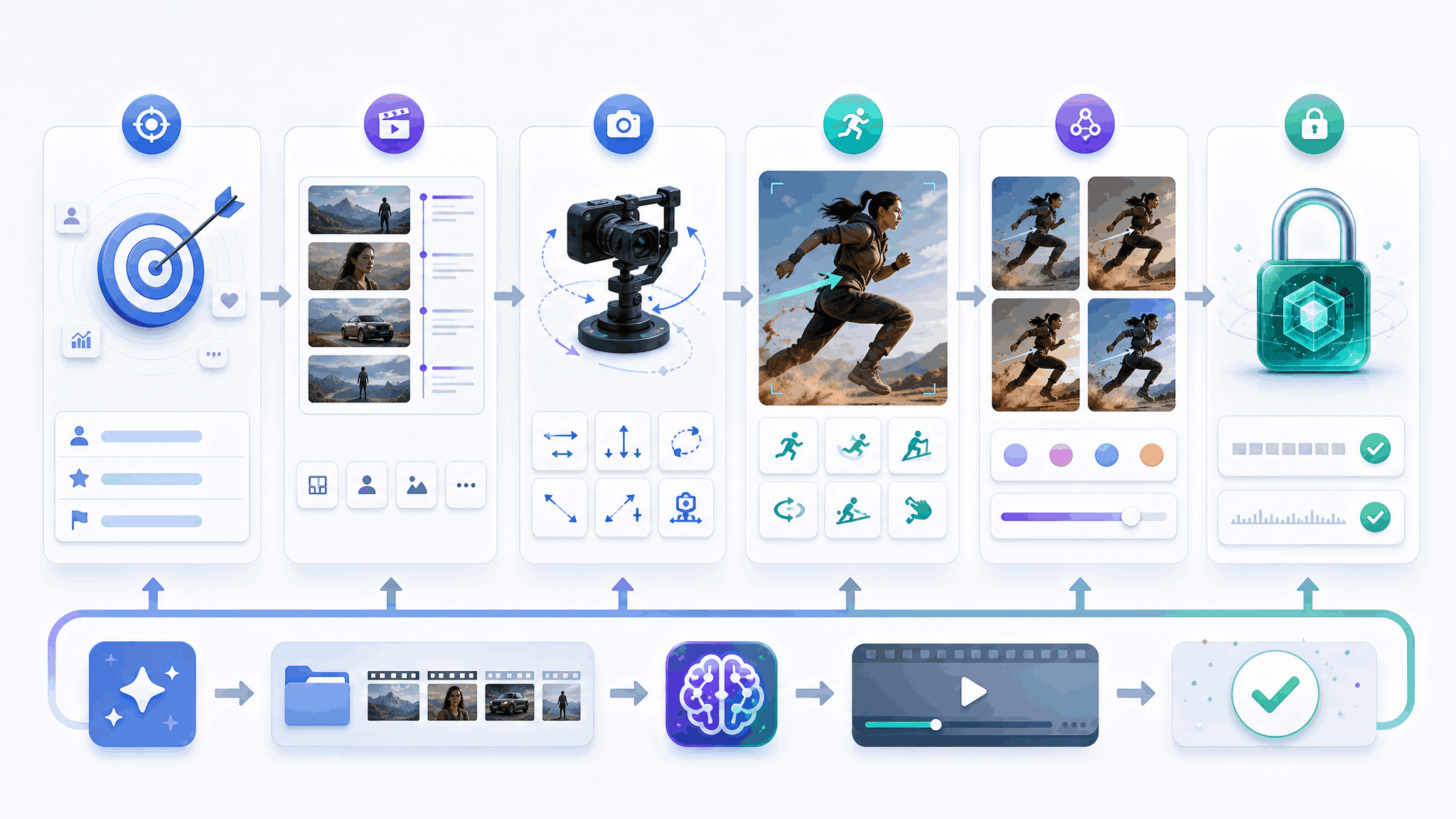 Figure 2: Suggested creator workflow for repeatable outputs
This approach tends to outperform overloaded prompts that mix narrative, style, and edit instructions in one paragraph.
Need a faster way to validate this workflow? VideoFlux to run the same prompt set across multiple AI video models and compare output quality, speed, and cost in one place.
Happy Horse 1.0 vs Real Production Constraints
In production, quality is only one variable. Teams also evaluate:
- Throughput: usable clips per hour
- Predictability: rerun frequency
- Editability: downstream cutdown suitability
- Cost fit: economics versus campaign volume
Happy Horse 1.0 is strongest when the target is short-form output with frequent iteration, especially for:
- Social campaign variants
- Product storytelling snippets
- Creator-style visual experiments
- Pre-visualization before hero-shot rendering
Limitations and Tradeoffs
A realistic deployment plan should acknowledge current limitations:
- Physics-heavy scenes may perform better on alternative models
- Long narrative continuity still needs clip-chaining discipline
- Dense multi-character action can reduce consistency
- Hyper-specific art direction may require post-editing or model mixing
 Figure 3: Typical tradeoff profile in creator workflows
Treat Happy Horse 1.0 as a high-utility generation engine, not a single-model replacement for every scenario.
Deployment Strategy for Teams
A practical adoption path is staged integration:
- Use Happy Horse 1.0 for ideation and first-pass production
- Route high-value hero scenes to premium models when required
- Standardize prompt templates by content vertical
- Track acceptance rate, rerun rate, and cost per usable second
This produces an evidence-based multi-model orchestration strategy instead of locking to one output style.
Bottom Line
Happy Horse 1.0 is a strong fit for teams that prioritize iteration speed, creator-friendly control, and scalable short-form AI video production.
Its highest value appears in workflows that need many usable outputs quickly, not occasional showcase renders. With structured prompting and shot planning, it can become a reliable component in modern creator pipelines.
Want to test Happy Horse 1.0 in a multi-model workflow? VideoFlux helps you create, compare, and scale across leading AI video models in one place.
Happy Horse 1.0 FAQ
What is Happy Horse 1.0 best used for?
Happy Horse 1.0 is best suited for short-form video generation, rapid concept iteration, and creator-style campaign production.
Is Happy Horse 1.0 suitable for long cinematic storytelling?
It can support long-form projects through clip chaining, but teams should plan for continuity control and selective rerendering.
How should teams evaluate Happy Horse 1.0?
Use fixed prompt sets, repeated runs, and measurable metrics: prompt adherence, continuity, acceptance rate, and cost per usable output.
Should teams use Happy Horse 1.0 as a single-model strategy?
Usually no. Multi-model orchestration is still the most practical strategy for balancing speed, quality, and budget.